The rules
Rounds, scoring and corners
How Muay Thai rounds and scoring work, why the first rounds count for little, and what the red and blue corners are, so you can follow a Samui fight.
Pick your fight night ↗Quick answer
Traditional stadium Muay Thai is described as five rounds of three minutes with two-minute rests, scored by the ten-point must system, with ten points for the round winner and nine or fewer for the loser. Kicks to the body and knees to the midsection score, clinch control scores highly and the first two rounds generally count little. Fighters start from a red or a blue corner.
Rounds and rests
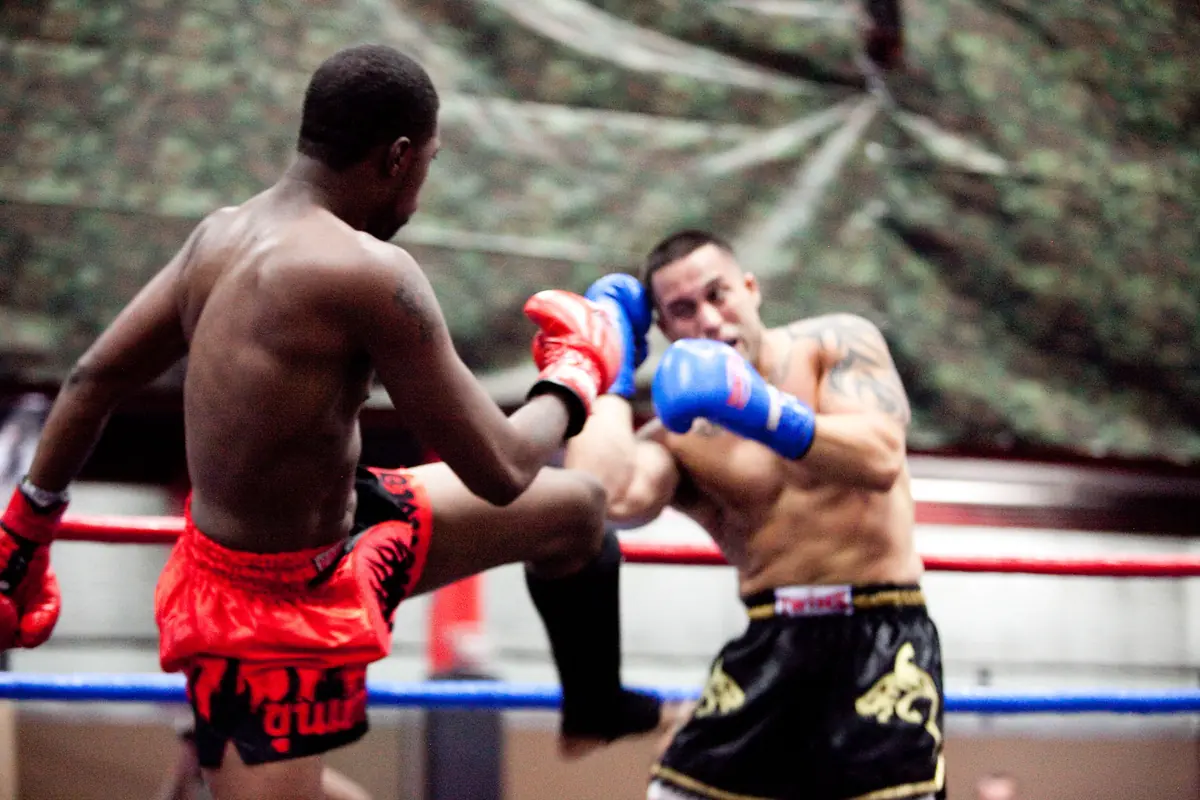
A guide to scoring systems in use today describes the traditional stadium scheme as five three-minute rounds with two-minute rests. It lists other rule sets with three rounds and one-minute rests, and gives a WBC Muay Thai format of five three-minute rounds. That is why the format on a Samui night can differ from what you read: stadiums and promotions use their own. The booking page does not state the round format, so treat the five-round description as the traditional model, not a promise.
The ten-point must system
Judges score every round on its own. According to the guide, the round winner takes ten points and the opponent nine or less, a tied round gives both ten, and a knockdown usually costs a point and the round. With no knockout, the higher total wins. A bout can therefore be settled on the cards without a dramatic finish, and a fighter who drops the early rounds can still come back in the later ones.
What scores
The guide says kicks to the body and knees to the midsection always score, and score more with a clear effect. Control of the clinch scores highly, and aggression counts only when all else is equal. Wikipedia adds that blows landing on an opponent's glove, forearm, shin or foot earn nothing, which is why a flurry of blocked kicks can look busy and still score zero. Watch the body shots and the clinch, and you will see what the judges see.
Why the early rounds count little
The guide notes that in the traditional scheme the opening two rounds usually count for nothing unless one fighter clearly dominates, and that later rounds carry more weight. This explains the feeling-out of many bouts: both fighters test range, throw few strikes and save energy. If the opening round looks cautious, that is the format, not the fighters. The urgency, and the roar from the crowd, tends to build from the middle rounds on.
Red corner, blue corner
Muay Thai rings use a red corner and a blue corner. Wikipedia dates the first international-style three-rope ring with red and blue padded corners to 1923 at Suan Sanuk Stadium. For a first-time visitor the colours are the simplest way to pick a side: choose red or blue before the first bell and see whose fight it becomes. The booking page does not say which fighter starts in which corner on a given night, so the choice is yours to make on the spot.
Gloves, referees and the clinch
Wikipedia records that hands were once bound with rope, and that after a death in the ring fighters were required to wear gloves. It says codified rules with referees and rounds timed by kick arrived under King Rama VII. It also notes that in Western boxing fighters are separated when they clinch, while in Muay Thai they are not, and that knees and elbows are often used from the clinch. That is the biggest difference you will see against a boxing match.
Who this isn't for
Looking for a rulebook for one particular night? This is not it. Round counts, scoring and even the bout count differ by stadium, and nothing here replaces the voucher. It is a primer for watching, not for betting or judging. To try the sport yourself, a beginner's class is the safer way in.
Frequently asked questions
How long is a round?
In traditional stadium scoring, three minutes, with five rounds and two-minute rests. Other rule sets use three rounds.
What is the ten-point must system?
Every round is scored on its own: ten points to the winner, nine or fewer to the other fighter.
What scores in Muay Thai?
Kicks to the body and knees to the midsection always score, and clinch control scores highly. Blows that hit a glove, forearm, shin or foot earn nothing.
Why do the early rounds look slow?
In the traditional scheme the opening two rounds usually count for nothing unless one fighter clearly dominates.
What do the red and blue corners mean?
They are the two sides a fighter starts from. Red and blue padded corners date from the first international-style ring in 1923, according to Wikipedia.
Sources